Imagine waking up tomorrow to discover that the leaders of the United States, Iran and Israel had decided to hand responsibility for ending the war to someone who didn’t care about winning the next election, protecting a political career or looking tough on television. Someone whose only instruction was to find the best possible way to end the conflict for the people affected by it.
After more than six months of fighting, it’s becoming increasingly difficult to see where all this is supposed to lead.
What exactly are we trying to achieve?
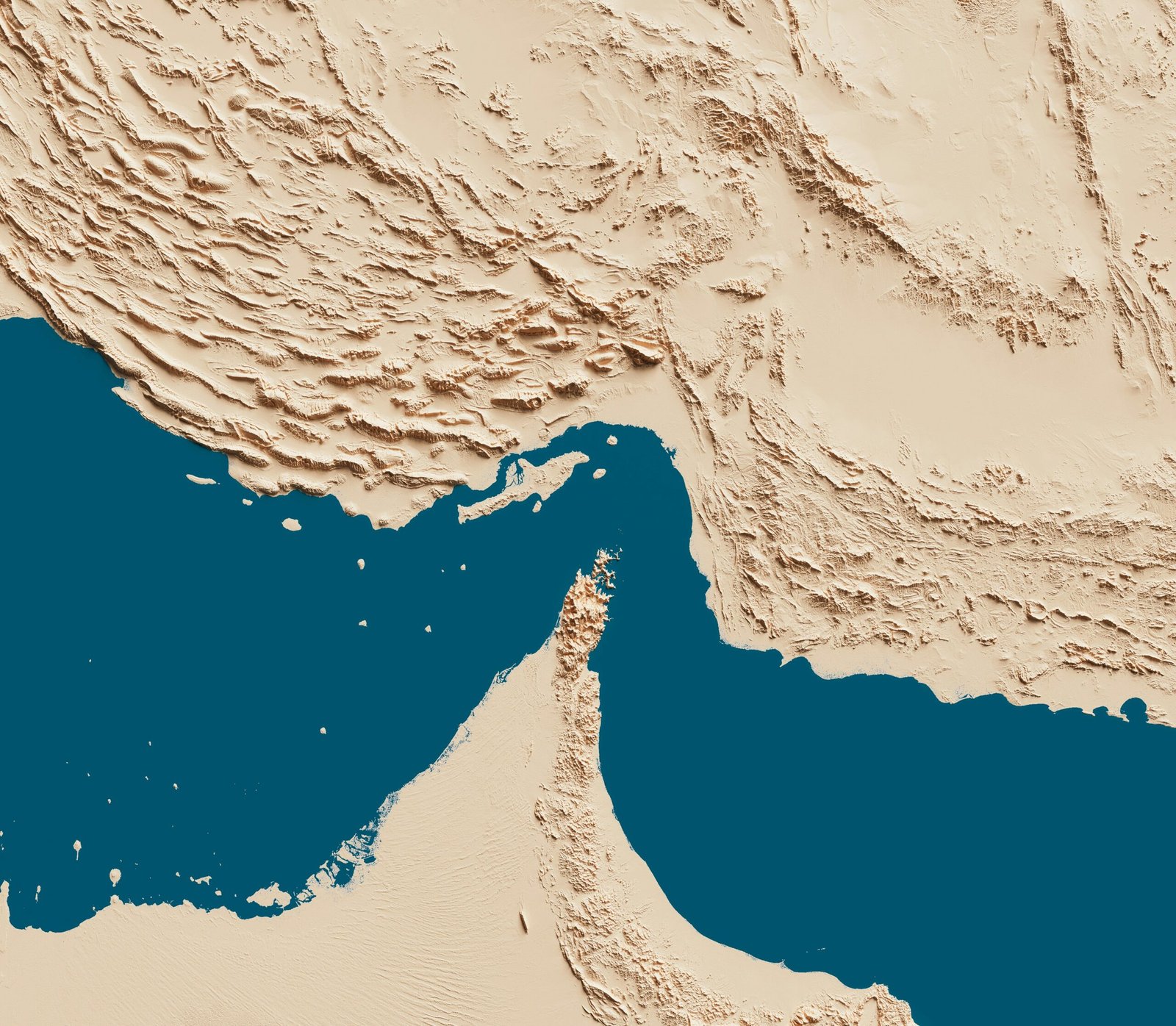
The war has become increasingly complicated. The United States and Israel have attacked Iran, Iran has retaliated against US interests and shipping, and Iranian-backed groups have become involved elsewhere in the region. The Strait of Hormuz has become a major point of confrontation, while the economic consequences are spreading well beyond the Middle East.
Oil prices are approaching $100 a barrel, which means people thousands of miles away are paying more for energy, while those much closer to the fighting are paying a far higher price in lives, homes and livelihoods.
And yet, somewhere among all the military briefings and political speeches, the purpose of the war can become rather blurred.
Military action can destroy weapons, infrastructure and military capability, and it can certainly kill people. What it can’t easily do is create trust, prosperity or a peaceful future.
Even if one side achieves its immediate military objectives, there is still the question of what happens afterwards. A weakened Iran, a damaged Israel or a frustrated America doesn’t automatically produce a safer Middle East. The consequences can last for generations.
The ultimate purpose of politics should surely be to create a better future, rather than simply to win the next stage of an argument.
Perhaps we should stop trying to decide who wins
If the objective is genuinely to make people’s lives better, then the starting point shouldn’t be how to defeat one side or force another to surrender. It should be to consider what kind of future ordinary people in Iran, Israel, America and the surrounding countries would actually choose if they had the opportunity.
I’d imagine most of them would choose something remarkably unremarkable. They’d like to go to work, raise their children, visit friends, pay the bills, go on holiday occasionally and complain about the government. Most probably don’t spend much of their day wondering how best to destroy their neighbours.
Governments, unfortunately, sometimes do, and that distinction is worth remembering.
People generally just want to get on with their lives.
So perhaps the first thing to do is stop shooting
This sounds ridiculously obvious, but sometimes the obvious gets lost. An immediate ceasefire would save lives and create something that doesn’t currently exist in sufficient quantities: space to think.
That doesn’t mean pretending that everything that’s happened is suddenly forgiven, that everyone is equally responsible, or that legitimate security concerns should simply be ignored. It means recognising that if we genuinely want to solve a problem, continuing to make the problem bigger probably isn’t the best strategy.
The difficult part, of course, is trust. Iran doesn’t trust America, Israel doesn’t trust Iran, and America has plenty of reasons not to trust either of them.
Perhaps they don’t have to.
Instead of relying on trust, a peace agreement could be built around verification, with international observers, inspections, monitoring and direct communication between military commanders making it much harder for either side to break the agreement without being caught.
You don’t have to believe that the other side is nice. You simply need to make it harder for them to start shooting again.
Everyone would have to give something up
This is probably the bit politicians find hardest because a genuine peace agreement would almost certainly leave everyone slightly unhappy.
Iran would want sanctions removed and security guarantees, while America would want meaningful restrictions on Iran’s nuclear and military capabilities. Israel would want guarantees that Iran couldn’t simply rebuild the capabilities it considers an existential threat, while the Gulf states would quite reasonably want to stop being caught in the middle.
Nobody gets everything, but that’s what a negotiated peace looks like.
We sometimes seem to think that if our side doesn’t get everything it wants, we’ve lost, and perhaps that’s one of the reasons wars become so difficult to end. A compromise isn’t necessarily a defeat; sometimes it’s simply the most successful outcome available.
If both sides can walk away knowing that they gave up something but gained something more important, perhaps that isn’t losing at all.
Perhaps it’s the closest thing to winning that matters.
And then there’s the awkward question of justice
People have been killed, homes have been destroyed and there are serious allegations of wrongdoing. Those things shouldn’t simply disappear because someone signs a piece of paper.
There should be investigations, evidence should be preserved and, where serious crimes have been committed, there should be accountability.
But there’s a difficult balance here too. If we insist on resolving every grievance before we allow the fighting to stop, we could end up with a very satisfying sense of moral righteousness while more people are being killed.
Sometimes an imperfect peace is better than a perfectly justified war that goes on forever.
That’s uncomfortable, but perhaps politics should occasionally be about doing what’s useful rather than what’s emotionally satisfying.
What if we measured success differently?
Imagine if politicians were judged by how many lives they had saved rather than how many enemies they had defeated, or if strength meant being able to negotiate from a position of confidence rather than simply being the person who made the biggest threat.
A president who could stand in front of their country and say, “We didn’t get everything we wanted, and neither did they. But the war is over, our people are safer, and our children have a better future,” might actually have achieved something far more difficult than winning a military confrontation.
Yet our political culture often treats compromise as weakness and victory as the only acceptable outcome. Perhaps we’ve become so accustomed to politics as a competition that we’ve forgotten what government is actually supposed to be for.
So how should this war end?
Probably not with a triumphant photograph of one side standing over the ruins of the other. It should end with an agreement that gives all the major players enough of what they need to make peace preferable to war.
The guns stop, shipping through the Strait of Hormuz becomes safe again and civilians are protected. Iran gets a path back into the international economy in return for verifiable restrictions on its nuclear and military capabilities. Israel gets meaningful security guarantees, America gets the assurances it needs, and the countries surrounding them get a genuine say in what happens next.
Nobody is going to walk away completely satisfied, and there will still be arguments, mistrust and plenty of people convinced that their side gave away too much. That’s probably unavoidable after a conflict like this.
But perhaps that’s a reasonable price to pay for something rather more valuable: the chance to move on.
Peace isn’t about making everybody happy. It’s about making it possible for people who don’t agree to live alongside one another without killing each other, while giving their children a reasonable chance of growing up without inheriting the same conflict.
Perhaps that’s what we should have been trying to achieve all along.
And perhaps that’s the real test of any political system: not whether it can win a war, but whether it can make war unnecessary.