Imagine that tomorrow morning, the leaders of the United States, Iran and Israel handed responsibility for ending the war to the AI Politician.
No more generals.
No more presidents trying to look strong.
No more governments worrying about what their supporters will think.
No more political calculations about the next election.
Just one instruction:
End the war in the best way possible for the people affected by it.
What would it do?
That’s a difficult question.
And perhaps it’s exactly the sort of question we should be asking.
First, let’s establish what is happening
The war between Iran, the United States and Israel has now been going on for more than six months.
The United States and Israel began their strikes against Iran in February, saying they were targeting Iranian military infrastructure and its nuclear and ballistic missile programmes. Iran responded with attacks across the region and announced the closure of the Strait of Hormuz.
A US counter-blockade followed.
A memorandum of understanding negotiated with Pakistani mediation in June created an opportunity for talks, but it failed to produce a lasting settlement. By late August, the House of Commons Library reported that there were no active US-Iran talks.
And now the situation is deteriorating again.
On 8 September, the United States destroyed five Iranian oil tankers after Iranian missile attacks on a US Navy warship.
Iran responded by launching ballistic missiles towards a US military base in Jordan and attacking ships in the Strait of Hormuz.
Most of the missiles fired towards Jordan were intercepted and no casualties were reported there. But the significance of the attacks is obvious: the cycle of retaliation is continuing.
Meanwhile, Iranian-backed Houthi forces have attacked Saudi Arabia, including energy infrastructure, further widening the conflict.
And the consequences aren’t confined to the Middle East.
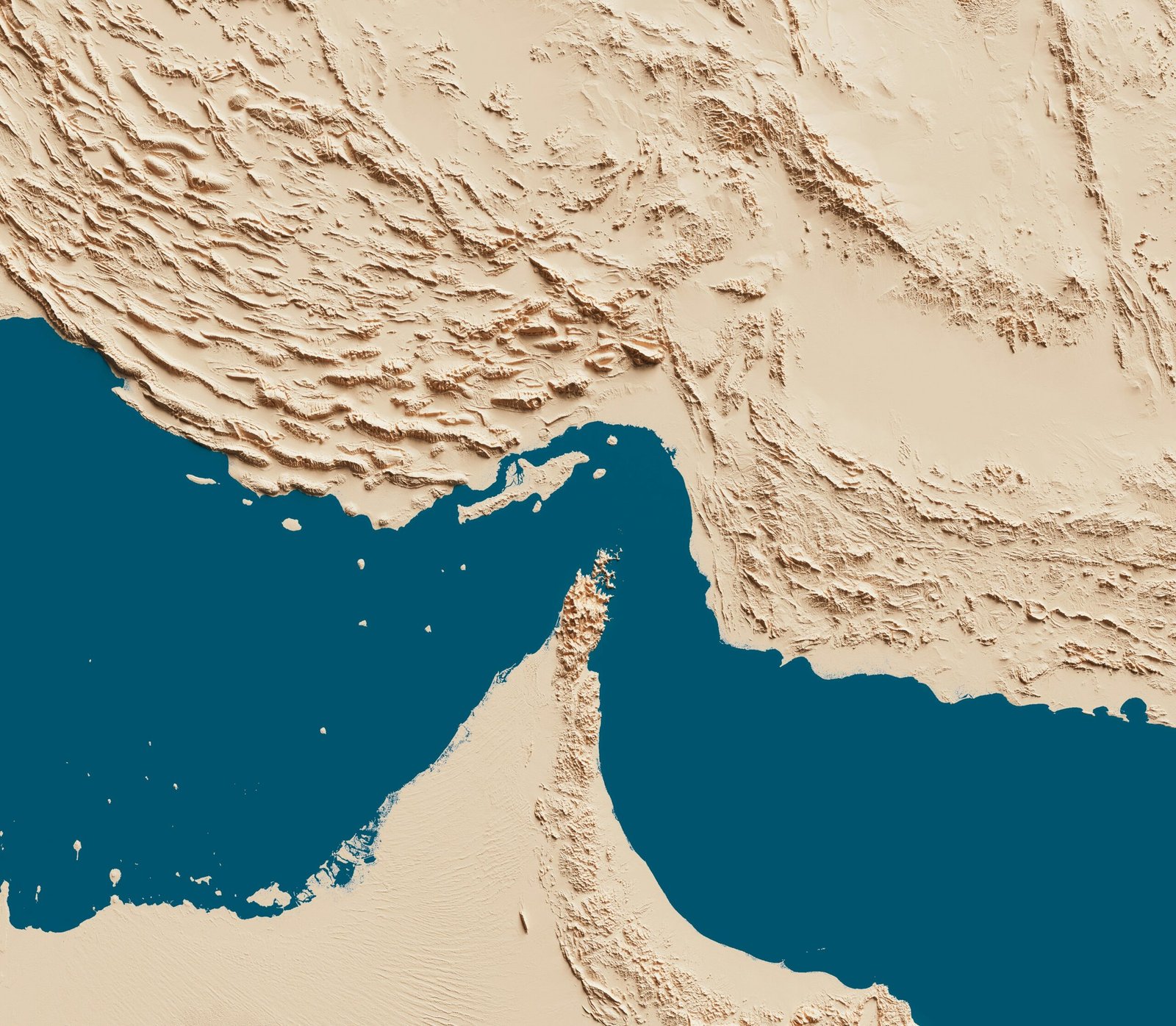
The Strait of Hormuz is one of the world’s most important energy routes. Shipping through it has fallen sharply, while oil prices have risen towards $100 a barrel.
Millions of people who have never heard a missile being launched are nevertheless feeling the consequences through energy prices, inflation and economic uncertainty.
So what should an AI Politician do?
It shouldn’t start by deciding who is the good guy
This is important.
An AI Politician shouldn’t begin by asking:
“Which side should I support?”
It should begin by asking:
“What outcome are we trying to achieve?”
If the objective is to produce the greatest possible wellbeing for the greatest possible number of people while protecting freedom, security and human dignity, then the objective cannot simply be:
Defeat Iran.
Nor can it be:
Defeat America.
Nor:
Defeat Israel.
Military victory might be an objective for a government.
It shouldn’t automatically be the objective of an AI whose job is to improve people’s lives.
The objective should be:
A durable peace in which the people of the region are safer than they are today.
That sounds obvious.
It isn’t.
Step one: stop making the situation worse
The first thing the AI Politician would probably recommend is an immediate ceasefire.
Not because one side deserves it.
Not because everything that has happened should be forgotten.
And not because the underlying disputes have suddenly disappeared.
Simply because every additional day of fighting creates more casualties, more destruction, more economic damage and more opportunities for the conflict to spread.
A ceasefire would need to apply to all major participants.
Iran would stop attacks on US and allied military targets and commercial shipping.
The United States would stop offensive strikes against Iran and Iranian shipping.
Israel would stop offensive operations directly connected to the wider conflict.
Iran-backed groups would also need to be brought into the arrangement.
That last part is crucial.
A ceasefire between Washington and Tehran isn’t much of a ceasefire if other parts of the regional conflict simply continue.
The recent attacks on Saudi Arabia demonstrate how easily the war can spread beyond the countries that originally started fighting.
But what if one side refuses?
This is where things become difficult.
A ceasefire can’t simply be wished into existence.
There has to be some mechanism for enforcing it.
The AI Politician would therefore need to distinguish between trust and verification.
It shouldn’t expect governments that have been fighting each other for months to suddenly trust one another.
Instead, it should create systems that make trust less important.
Independent international observers.
Satellite monitoring.
Inspection mechanisms.
Verified withdrawal of certain military forces.
Hotlines between military commanders.
Real-time reporting of violations.
And, crucially, consequences for breaking the agreement.
The principle would be simple:
Don’t ask people to trust each other when you can build systems that allow them to verify each other.
Step two: find out what everyone actually wants
The next problem is that wars often become harder to end because governments publicly demand things they know the other side cannot accept.
So the AI Politician would separate public rhetoric from underlying interests.
The United States wants Iran’s nuclear capabilities constrained, attacks on American forces to stop and freedom of navigation through the Strait of Hormuz restored.
Israel wants protection from what it considers the Iranian military threat and wants Iran’s ability to attack Israel, directly or through allied armed groups, substantially reduced.
Iran wants the survival of its government, an end to attacks on its territory, relief from crippling economic pressure and recognition of its sovereignty.
The Gulf states want something rather less complicated:
They want to stop being caught in the middle.
They want their cities and oil facilities left alone.
They want their shipping routes open.
And ordinary people across the region want something even simpler.
They want to live their lives without worrying about whether the next explosion is coming to their neighbourhood.
These objectives aren’t completely compatible.
But neither are they completely incompatible.
And that’s where diplomacy begins.
Step three: stop asking who wins
One of the biggest problems with negotiations is the language of victory.
If Iran agrees to something, its government risks looking as though it has surrendered.
If the United States gives something to Iran, the American government risks looking weak.
If Israel accepts a compromise, its government risks being accused of abandoning Israeli security.
So perhaps the answer is to stop designing agreements around the idea that somebody has to lose.
Instead, design a settlement in which every side gets something it genuinely needs.
Iran gets:
- An end to attacks on its territory.
- A phased reduction of economic sanctions.
- Guaranteed humanitarian and civilian trade.
- Recognition of its sovereignty.
- A negotiated framework for its nuclear programme.
The United States gets:
- Verifiable restrictions on Iran’s nuclear programme.
- An end to attacks on American forces.
- Secure freedom of navigation through the Strait of Hormuz.
- International monitoring.
- Commitments restricting the transfer of certain weapons to regional armed groups.
Israel gets:
- Verifiable limits on Iranian military capabilities that directly threaten Israel.
- International security guarantees.
- Mechanisms for dealing with attacks by Iranian-backed groups.
- A regional security framework involving neighbouring countries.
The Gulf states get:
- Protection from attacks.
- Secure shipping routes.
- A meaningful role in the regional security arrangements that affect them.
Nobody gets everything.
That’s the point.
Step four: deal with the Strait of Hormuz
This may be one of the most immediate practical problems.
The Strait of Hormuz is a critical route for global energy supplies. Shipping has already fallen well below normal levels, while the conflict has pushed oil prices sharply higher.
The AI Politician would therefore treat reopening the strait as an urgent humanitarian and economic priority.
But it wouldn’t simply demand that Iran reopen it while offering nothing in return.
Instead, it could propose a staged arrangement.
First, an immediate suspension of attacks on commercial shipping.
Then the creation of internationally monitored safe shipping corridors.
Then a phased withdrawal of military forces from designated areas.
And finally, a permanent agreement guaranteeing freedom of navigation.
The principle would be:
The Strait of Hormuz should not become a bargaining chip in a permanent regional war.
Its security matters not only to Iran and the United States, but to everyone who depends on global energy supplies.
Step five: nuclear weapons and security
There is another problem that cannot simply be negotiated away.
Iran’s nuclear programme.
The United States and Israel have made preventing Iran from acquiring a nuclear weapon a central justification for military action.
Iran, meanwhile, has repeatedly argued for its right to peaceful nuclear technology while rejecting the idea that it should surrender its sovereignty.
An AI Politician shouldn’t simply choose one argument.
It should ask what arrangement provides the greatest security with the least risk of future war.
That probably means a verifiable international agreement.
Iran would accept intrusive inspections and clearly defined limits on enrichment and other sensitive nuclear activities.
In return, it would receive meaningful sanctions relief and access to international trade.
The agreement would need to be much more difficult to abandon than previous arrangements.
And it would need international backing rather than depending entirely on the goodwill of whichever government happens to be in power in Washington or Tehran.
Because if every change of government can destroy the agreement, then the agreement isn’t much of an agreement.
And what about justice?
This is perhaps the hardest part.
What about the people who have been killed?
What about people whose homes have been destroyed?
What about civilian infrastructure?
What about prisoners?
What about alleged war crimes?
What about compensation?
An AI Politician shouldn’t simply say:
“Let’s forget the past and move on.”
Peace without accountability can leave the foundations for another war.
But neither should it make complete justice a precondition for peace.
History rarely offers perfectly just endings.
Sometimes the choice is between an imperfect peace and continued suffering.
That doesn’t mean crimes should be ignored.
It means accountability and peace may need to operate on parallel tracks.
Independent investigations could continue.
Evidence could be preserved.
Those responsible for serious crimes could potentially face prosecution.
Victims could receive compensation.
But the existence of unresolved grievances shouldn’t automatically prevent the guns from falling silent.
Would this actually work?
Maybe not.
And this is where the AI Politician needs to be honest.
There is no magic algorithm for making governments trust each other.
There is no equation that can calculate the perfect amount of sanctions relief.
There is no guarantee that a ceasefire won’t collapse.
There is no certainty that every armed group would obey its sponsors.
And there is no way for an AI to remove the human emotions involved in a conflict that has already killed and displaced so many people.
The AI Politician could propose what appears to be a rational settlement.
It couldn’t force people to accept it.
And that may be one of the most important limitations of the whole idea.
Perhaps the real test is this
Imagine two leaders sitting across a negotiating table.
Both believe their country has been wronged.
Both believe the other side is dangerous.
Both have people at home demanding strength.
Both are worried that compromise will be interpreted as weakness.
And both know that if negotiations fail, the fighting can continue.
What would the AI Politician tell them?
Perhaps this:
You don’t have to agree about the past to agree about the future.
You don’t have to decide who is morally superior.
You don’t have to like each other.
You don’t even have to trust each other.
You simply have to decide whether the next generation should inherit the same conflict.
Because there is a strange paradox at the heart of war.
A government can win a battle and still lose the peace.
It can destroy an enemy’s military capability and create a new generation of people who hate it.
It can achieve military objectives while making the world less safe.
And it can be so determined not to appear weak that it becomes incapable of compromising.
So what would the AI Politician do?
It wouldn’t promise victory.
It would try to make victory unnecessary.
Its priorities would be:
Stop the killing.
Protect civilians.
Reopen essential trade and shipping.
Reduce the risk of escalation.
Create mechanisms for verification.
Address the security concerns of all sides.
Provide economic incentives for peace.
Investigate serious wrongdoing.
And build a settlement that can survive changes of government.
It would also recognise something that politicians sometimes struggle to admit:
A negotiated settlement in which nobody gets everything they want may be a far greater success than a military victory that leaves everyone less secure.
Perhaps this is what politics is supposed to be
There is a temptation to think that politics is about choosing sides.
Left or right.
Iran or America.
Israel or Palestine.
Nationalism or internationalism.
Strength or weakness.
But perhaps politics at its best is something rather different.
It is the process of solving problems between people who don’t agree.
The job isn’t necessarily to determine who is the winner.
It is to find a way for people with incompatible interests to live alongside one another without killing each other.
That’s an extraordinarily difficult thing for humans to do.
Which is precisely why it is an interesting test for an AI.
Not:
Can AI defeat our enemies?
Not:
Can AI make the perfect political speech?
Not even:
Can AI run a government?
But:
Can AI help people find solutions to problems that humans have repeatedly failed to solve?
We don’t know yet.
But if the AI Politician is going to mean anything, this is exactly the sort of question it should be trying to answer.
Because if its ultimate purpose is to make people’s lives better, there can surely be few more important objectives than finding a way to turn a war into a peace.
And perhaps the most important lesson is this:
If the only available definition of victory is that the other side loses, perhaps we’ve misunderstood what politics is for.